RIBO CE Audit: How to Prepare for a Spot Check
How RIBO's Spot Check (compliance audit) works, what it asks for on continuing education, the CE issues RIBO keeps finding, and a checklist to get ready.
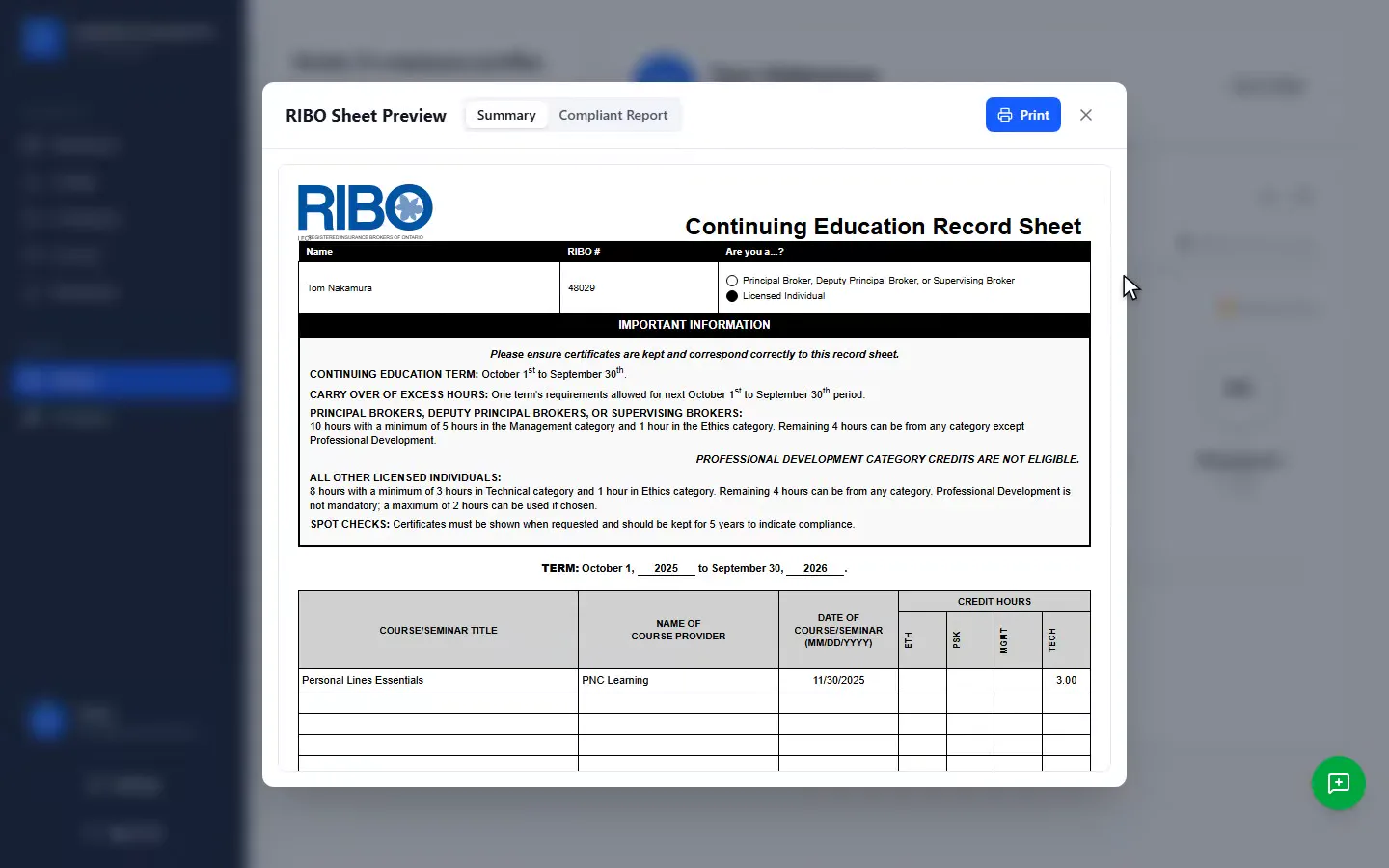
RIBO checks brokerage compliance through its Spot Check program, which RIBO also calls its Compliance Audit Program. CE is one part of it. The CE part is easy to get right, and RIBO's own numbers show many brokerages still don't. This post explains the process, what RIBO asks for on CE, and how to be ready before the call comes.
What a Spot Check is
RIBO describes Spot Checks as an integral part of its public protection mandate. They review a brokerage's operations and financial records for compliance with the Registered Insurance Brokers Act, Regulation 991 and RIBO's by-laws and guidelines. RIBO's Spot Check page does not say how brokerages are selected.
How the process works
- A RIBO auditor calls the principal broker to say the brokerage has been selected and to explain the process.
- The principal broker receives an email with links to modules to complete by a deadline. There can be up to 13 modules, depending on the audit and factors such as brokerage size, regulatory history and when the last Spot Check was done.
- Auditors sometimes visit the brokerage to meet the principal broker and collect more documents.
- Once the modules are submitted, the auditor reviews them and may ask for more information or more modules.
- Auditors generally ask for a meeting with the principal broker to discuss the Spot Check.
- The firm is told the outcome in writing. Auditors work with brokerages to resolve minor deficiencies. Serious issues that pose a high risk to the public go to RIBO's Investigations Department.
RIBO's checklist says the principal broker must complete the assigned modules and provide everything requested, respond to all requests in a timely manner, and be available to discuss the Spot Check.
What RIBO asks for on CE
Among the documents a principal broker may be asked to provide are the Continuing Education compliance certificates for the previous two terms (October to September) for all licensed individuals. The Office Processes module also asks about the firm's policy and procedure manuals, supervision plan and CE.
So you need certificates, not just totals, for every licensed person at the firm for two full terms. RIBO separately asks individuals to keep certificates for 5 years. The RIBO CE Record Sheet notes that certificates must be shown when requested.
What RIBO keeps finding
RIBO's 2024-2025 Spot Check Report covers 60 completed Spot Checks. On CE it found:
- 31% of the brokerage cases reviewed did not have processes for monitoring or maintaining up-to-date records of their licensees' CE hours.
- In the cases reviewed, recorded CE hours did not align with CE certificates.
Across all areas, auditors offered guidance on minor improvements in 95% of audited brokerages, and 9 of the 60 files (15%) were referred to the Investigations Department for significant regulatory concerns. Those referrals involved issues such as disclosure, trust funds and books and records. The report does not tie them to CE.
Preparing your CE records
Do this before you are selected. The steps are the same either way, and they are much easier spread across a year than squeezed into a module deadline.
- List every licensed individual at the firm for the last two terms, including people who have since left, and note each person's role. Principal, deputy principal and supervising brokers have a different requirement (10 hours) from everyone else (8 hours).
- For each person and term, collect every certificate or letter of completion. Put them in one place, filed by term.
- Reconcile. Every hour in your log should match a certificate, and every certificate should match a log entry. This is the mismatch RIBO reports finding.
- Check category minimums and caps for each person: Ethics, Technical or Management minimums, the 2-hour Professional Development cap, and no Professional Development for supervisors.
- Check any carry-over hours. Only one term's requirement can carry forward, and category requirements still apply.
- Check new hires against the first-October rule, and keep RIBO's response to any exemption or extension request on file.
- Write down your CE monitoring process. If it is not in your Plan of Supervision or office procedures, add it.
- Fix gaps now. If someone in the current term is short, they still have until September 30 to complete accredited hours.
RIBO's Guide to Spot Checks course
RIBO launched an online Guide to Spot Checks course in October 2025. It is designed mainly for principal and deputy principal brokers, but RIBO says it is also useful for office managers, compliance officers and accountants. It costs $50 (non-refundable), takes about two hours, is self-paced, and is accredited for 2 Management CE hours. It is not currently mandatory. RIBO says it is especially important to take before a Spot Check and recommends taking it once each term because the content is updated. RIBO describes the course as guidance, not a substitute for case-specific requirements, and suggests confirming expectations with your assigned auditor or compliance@ribo.com.
After the Spot Check
Most Spot Check files close with a letter to the principal broker setting out the outcome and any recommendations. If your CE process was flagged, update your procedures and keep evidence that you did. For the wider responsibilities a principal broker carries, see principal broker CE compliance.
How CE Trackr helps
CE Trackr keeps 5 years of certificate history for each broker. Scan a photo or PDF and it fills in the course, provider, date, hours and category. Principal brokers see the team on one dashboard, and reminders go out before deadlines. Start tracking free.
Frequently asked questions
What CE documents does RIBO ask for in a Spot Check?
A principal broker may be asked for Continuing Education compliance certificates for the previous two terms (October to September) for all licensed individuals at the firm.
How does RIBO choose brokerages for a Spot Check?
RIBO's Spot Check page does not say how brokerages are selected. It says the number of modules depends on factors such as brokerage size, regulatory history and when the last Spot Check was done.
Is RIBO's Guide to Spot Checks course mandatory?
No, not currently. It costs $50, takes about two hours and is accredited for 2 Management CE hours.
What happens if a Spot Check finds problems?
RIBO tells the firm the outcome in writing. Auditors work with brokerages to resolve minor deficiencies, and serious high-risk issues are referred to the Investigations Department.
Stop chasing certificates.
CE Trackr reads your certificates, tracks hours by category and reminds you before the deadline — for you or your whole brokerage.
Start tracking freeSources
This article is general information, not legal or regulatory advice. RIBO's rules can change — always confirm current requirements with RIBO at ribo.com.